


What’s inside your Dyson
A cordless Dyson looks simple from the outside: a handle, a wand, a bin. Inside there are several parts working together, and any of them can wear out. Here’s what sits under the housing and what we replace in the workshop.
 Message on WhatsApp
Cyclones and bin
Air with dust first reaches the bin and the cyclones. The Dyson V15 Detect has 14 of them, and they separate dust from the airflow so it doesn’t travel any further. The bin holds 0.77 L and should be emptied when the dust reaches the MAX line. If the vacuum cuts out, pulses or loses charge quickly, one possible cause is dirty cyclones. Dyson advises removing the bin and cleaning the cyclones with a microfibre cloth.
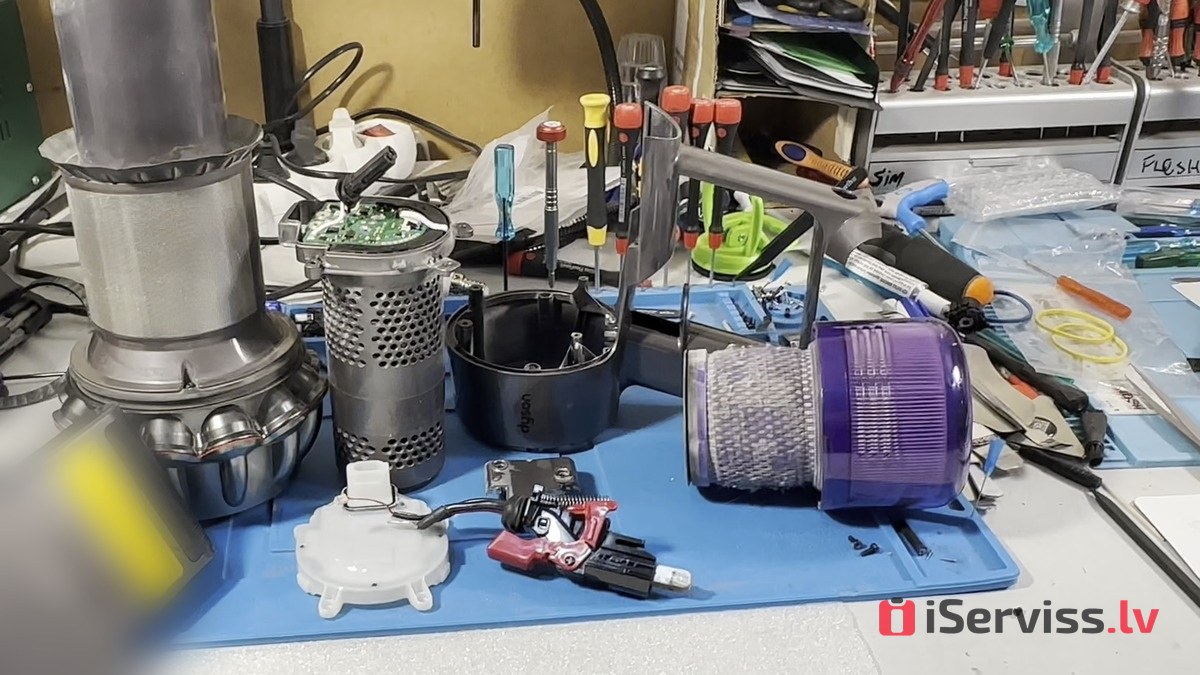
Filter
The vacuum has a washable filter. Dyson recommends washing it once a month, and more often if you vacuum a lot of fine dust or use Boost mode often. After washing, the filter needs at least 24 hours to dry in a well-ventilated place. Only put it back when it is completely dry. A clogged filter is one possible reason a vacuum pulses or cuts out.
Motor
The V15 Detect runs on a Dyson Hyperdymium digital motor that spins at up to 125,000 rpm. If the vacuum cuts out, pulses or loses charge quickly, there are several possible causes: a blockage, the filter, the cyclones, the battery, and sometimes the motor. A diagnosis shows which one it is. If the motor is the cause, we replace it.
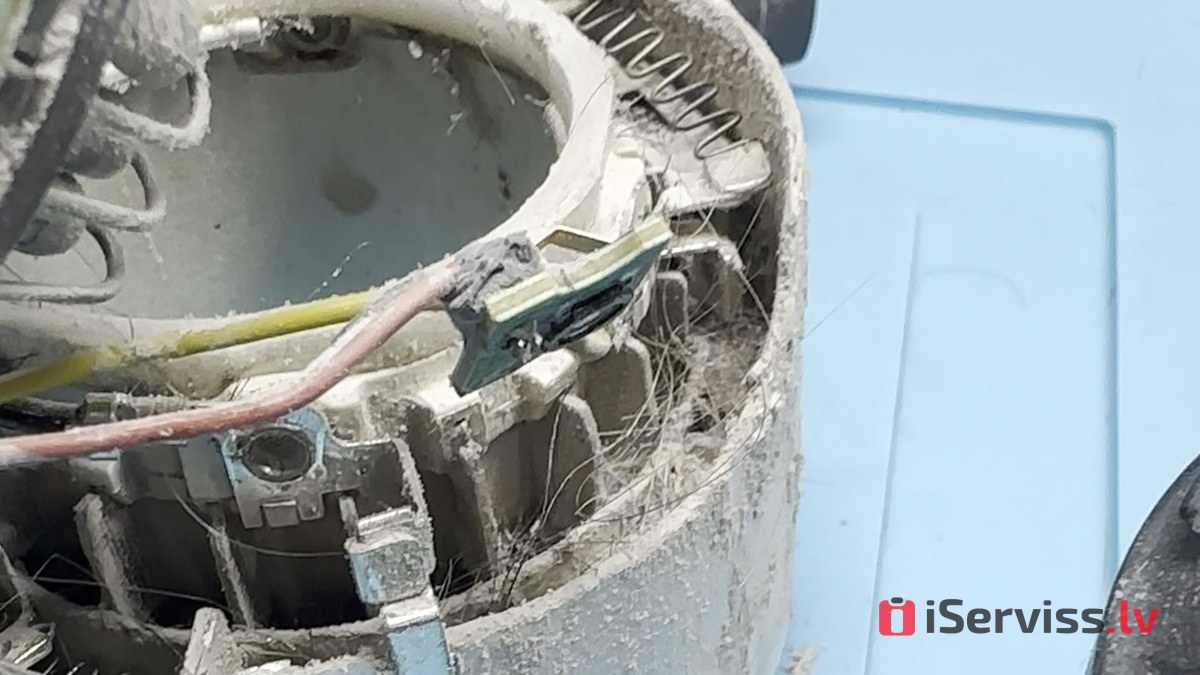
Battery and button module
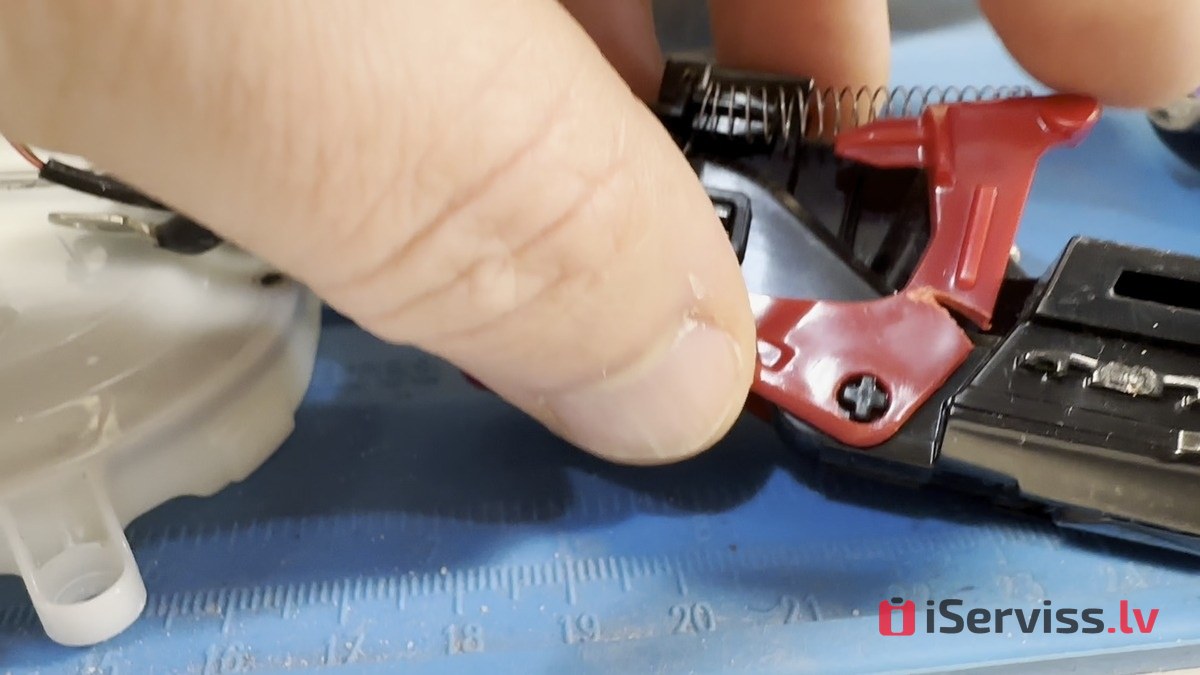
The V15 battery is removable: you take it out by pressing a button (Dyson calls it click-in). On the V11, depending on the version, the battery is either click-in or held in with screws at the base. A battery is a consumable part: over time a single charge lasts less, and the vacuum may stop before you’ve finished cleaning. Under the battery, in the handle, you will usually find the button module. If the button doesn’t respond or the vacuum doesn’t switch on the first time, sometimes replacing just this module is enough, rather than the whole vacuum; the diagnosis will tell. At our workshop in Riga we replace batteries, motors, button modules, filters and brush heads. If you have the repair done with us, the diagnosis is free; if you decide against the repair, it costs €20.
Tips
- Wash the filter once a month and let it dry completely, at least 24 hours.
- Empty the bin when it reaches the MAX line, and don’t take the vacuum apart yourself: it contains a lithium-ion battery.
Also read: 3 signs your Dyson needs a technician.




- Tourism and leisure
- 3MK
- Solar Power
- Green Cell
- LED Lamps
- Drones
- Mous Accessories
- Details
- Phones and smartphones
- Tablets, accessories
- Photo, video equipment, optics
- TV, Video equipment
- Laptops, accessories
- Gaming Consoles
- Accessories
- Health care & beauty
- Computers
- For kids
- Device
- Audio equipmets
- Transportation devices
- Home and Garden
- Building tools
- Small appliance

Kr. Barona iela 70, Rīga.


